
Bathroom Remodel in Tampa, FL: What Does a Complete Renovation Include?
A complete bathroom remodel in Tampa typically includes demolition, plumbing and electrical updates, waterproofing, tile, shower or tub work, vanity installation, countertops, fixtures, lighting, ventilation, flooring, paint, trim, and final finish work. The best remodels are designed around moisture control and long-term durability, not just appearance, because Tampa’s humid climate puts bathrooms under constant environmental stress.
A cosmetic refresh may involve paint, lighting, mirrors, hardware, and a new vanity. A full renovation goes further by opening walls, replacing the shower system, changing tile, relocating fixtures, improving ventilation, correcting water damage, and rebuilding the room around a more functional layout.
That difference matters when budgeting. Replacing finishes in their existing locations is one type of project. Moving a toilet, expanding a shower, changing electrical circuits, rebuilding walls, or correcting hidden moisture damage creates a much more involved renovation.
This guide covers the complete decision process. Separate Nexus guides go deeper into bathroom remodeling costs in Tampa and how long a bathroom remodel takes.
Start With the Bathroom Layout, Not the Finishes
The most expensive mistake in bathroom remodeling is choosing tile, fixtures, and colors before determining whether the room actually works. A good layout should provide comfortable clearances, practical storage, safe access to the shower or tub, useful lighting, and enough space around the vanity and toilet.
Keeping plumbing fixtures close to their existing positions can reduce complexity. Moving a toilet or shower drain can require additional plumbing work and may affect the floor assembly. In some bathrooms, that expense is justified because the existing layout wastes space. In others, a better vanity, larger shower enclosure, or different door configuration can improve the room without relocating everything.
Think about how the bathroom is actually used
A primary bathroom used by two adults has different requirements from a guest bath. Double sinks, separate storage zones, a larger shower, private toilet area, makeup lighting, and linen storage may matter more in a master suite. A smaller secondary bathroom usually benefits from compact fixtures and efficient storage.
Waterproofing Is the Most Important Hidden Part of a Tampa Bathroom
Tile is not the waterproofing system. Grout joints, corners, penetrations, shower curbs, niches, benches, and transitions all need to be detailed correctly beneath or behind the visible finish.
That is especially important in Tampa, where high ambient humidity means bathrooms already operate in a moisture-heavy environment. A poorly built shower can allow water into backer materials, framing, or adjacent finishes long before obvious damage appears.
What proper shower preparation should address
A shower system needs a correctly sloped base, compatible waterproofing membrane or approved waterproof assembly, properly treated corners and seams, sealed penetrations, and careful integration around the drain. Niches and benches require the same attention because they create additional horizontal and transitional surfaces.
Ventilation works with waterproofing rather than replacing it. The waterproof system controls liquid water inside the wet area; ventilation helps remove humid air after bathing.
Ventilation matters in Florida bathrooms
A properly sized exhaust fan should move humid air out of the bathroom rather than simply circulating it into another interior area. In a remodel, fan placement, ducting, and the condition of the existing ventilation should be evaluated before ceilings are closed.
Best Bathroom Materials for Tampa’s Climate
Bathroom materials should tolerate repeated wetting, cleaning, humidity, and temperature changes. The right choice is usually a balance between appearance, slip resistance, maintenance, and installation quality.
Porcelain tile
Porcelain is one of the most practical choices for Tampa bathrooms because it is dense, durable, and available in formats that imitate stone, concrete, wood, and marble. It works well on floors and walls when the specific product is rated for the intended application.
For a deeper material comparison, see the best tile for a bathroom in Florida’s climate.
Natural stone
Marble and other natural stones can create a premium look, but they generally require more maintenance and careful product selection than porcelain. Natural stone can be sensitive to staining, etching, cleaners, and moisture depending on the material and finish.
Homeowners deciding between the two can review marble vs. porcelain bathroom tile in Tampa.
Bathroom flooring
Bathroom floors should prioritize water resistance and traction. Large-format porcelain can reduce the number of grout joints, while smaller-format mosaics may provide more grip in shower floors because of the additional grout lines.
If the remodel extends into adjacent bedrooms, closets, or hallways, material transitions should be planned carefully. Our guide to the best flooring for Florida humidity in Tampa covers broader whole-home flooring decisions.
Walk-In Shower, Bathtub, or Both?
The answer depends on room size, household needs, accessibility, and resale considerations. Many Tampa homeowners prefer larger walk-in showers in primary bathrooms because they provide easier access and allow features such as benches, niches, handheld sprays, rain heads, and frameless glass.
A bathtub may still make sense for families with young children, homeowners who regularly use a tub, or properties where preserving at least one bathtub supports broader buyer appeal.
If you are deciding between these formats, read our dedicated comparison of walk-in showers vs. bathtubs for Tampa homes.
Frameless vs. framed shower doors
Frameless glass creates a cleaner visual line and can make tile work more visible. Framed systems usually offer a lower-cost enclosure with more metal around the glass. Both can work well when properly installed and matched to the shower design.
The enclosure should be planned before tile work is complete because curb dimensions, wall conditions, hardware locations, and door swing affect the finished installation. See our guide to frameless vs. framed shower doors.
Vanity, Storage, Lighting, and Everyday Function
A bathroom can have expensive tile and still feel frustrating if the vanity lacks storage, outlets are poorly positioned, or the mirror lighting creates shadows.
Choose a vanity for the room, not just the catalog photo
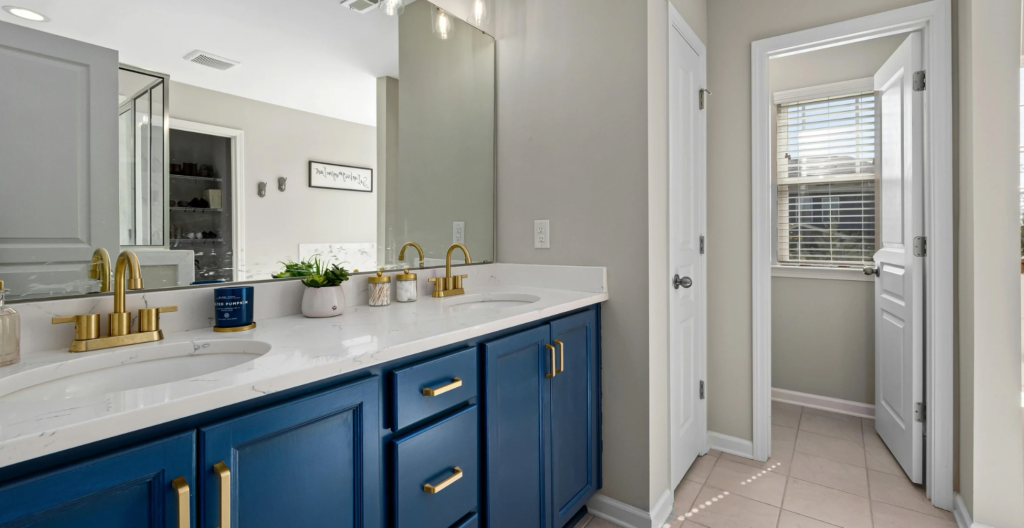
Vanity width, drawer clearance, door swing, plumbing location, countertop overhang, sink placement, and available floor space all matter. In humid Florida conditions, cabinet construction and finish quality also deserve attention.
For material and sizing guidance, see how to choose a bathroom vanity for a Florida home.
Layer the lighting
A useful bathroom typically combines general lighting with task lighting at the vanity and appropriate lighting in wet or shower areas. Lighting only from the ceiling can create shadows across the face, which is why side or well-positioned mirror lighting matters for grooming.
Build storage into unused space
Recessed medicine cabinets, vanity drawers, tall linen cabinets, shower niches, and shelves can reduce countertop clutter. In smaller Tampa bathrooms, vertical storage often adds more function without making the room physically larger.
For compact spaces, our guide to small bathroom remodel ideas for Tampa homes focuses specifically on maximizing limited square footage.
How Much Does a Bathroom Remodel Cost and How Long Does It Take?
Bathroom remodel cost and duration depend primarily on the size of the room, whether plumbing moves, the condition behind existing finishes, tile coverage, shower complexity, cabinetry, fixtures, glass, and the level of finish.
A limited cosmetic update may stay below the cost of a full gut renovation, while a primary bathroom with custom tile, a rebuilt shower, plumbing changes, premium vanity cabinetry, glass, lighting, and structural corrections can move into a much higher investment range. For Tampa homeowners planning a substantial renovation, budgets often move from the low five figures into $30,000, $50,000, or more as scope and finish level increase.
The same principle applies to time. A surface-level refresh can be relatively short. A full renovation involving demolition, rough plumbing and electrical work, inspections, waterproofing, tile curing, cabinetry, countertops, glass measurements, and finish work typically requires multiple coordinated stages.
| Project Type | Typical Scope | Complexity |
|---|---|---|
| Cosmetic refresh | Paint, lighting, mirror, hardware, limited fixture replacement | Low |
| Midrange remodel | Vanity, tile, shower or tub, plumbing fixtures, lighting, flooring | Moderate |
| Full upscale renovation | Layout changes, custom shower, premium tile, cabinetry, glass, plumbing and electrical upgrades | High |
For detailed planning numbers, use the dedicated guides on bathroom remodel cost in Tampa and bathroom remodel timelines in Tampa.
Do Bathroom Remodels in Tampa Require Permits?
Permit requirements depend on the actual scope and the jurisdiction where the property is located. Within the City of Tampa, bathroom remodels are specifically listed as an example of a residential building alteration when the project meets the applicable alteration criteria.
Electrical, plumbing, and mechanical work may also require the appropriate trade permits and inspections. Tampa’s residential inspection guidance requires concealed electrical, plumbing, gas, and mechanical components to be completed, tested, and pass the required inspection before they are covered.
At the same time, the City notes that plans are not required for some minor remodeling work or minor plumbing, electrical, and mechanical repairs. That is why permit needs should be determined from the project’s exact scope rather than from the word “bathroom remodel” alone.
Projects outside Tampa city limits may fall under a different permitting authority. Condominium projects can also follow different permitting classifications and association requirements. Confirm jurisdiction, permit responsibility, and approvals before demolition begins.
How to Choose a Bathroom Remodeling Contractor in Tampa
A bathroom renovation combines several systems in a very small space. Tile, plumbing, waterproofing, glass, electrical work, cabinetry, flooring, ventilation, and finish carpentry all meet within a few feet of each other. Coordination matters as much as any individual material.
Ask who will actually perform the work, how waterproofing is handled, how unexpected conditions are documented, who coordinates trade sequencing, whether the contractor manages required inspections, and how material selections are confirmed before installation.
Nexus Design uses direct crews rather than relying on layers of subcontractors for the core renovation work. Our teams work with tile, flooring, cabinetry, kitchens, bathrooms, and outdoor renovations across Tampa residential projects. That daily field experience helps us evaluate not only how a bathroom should look, but how its materials and assemblies need to perform in Florida conditions.
A remodel should be judged by what is behind the tile as much as what is visible after the final cleaning. Straight tile lines and beautiful fixtures matter, but waterproofing, substrate preparation, plumbing placement, ventilation, and installation tolerances are what protect the investment over time.
Frequently Asked Questions
What should I replace first in an outdated Tampa bathroom?
Start by evaluating functional and moisture-related problems before cosmetic finishes. Failing shower assemblies, damaged tile substrates, poor ventilation, leaking fixtures, inadequate storage, and an inefficient layout usually deserve priority over decorative upgrades.
What tile is best for a bathroom in Tampa?
Porcelain tile is one of the most practical options because it is dense, durable, moisture resistant, and available in many finishes. The exact tile should still be selected according to whether it will be used on a bathroom floor, shower floor, or wall and the traction and maintenance requirements of that location.
Should I remove my bathtub and install a walk-in shower?
It can make sense when the homeowner values easier access, a larger shower, and modern functionality. However, households with young children or homeowners concerned about preserving a bathtub for future buyers may prefer to keep at least one tub elsewhere in the home.
Does bathroom remodeling add value to a Tampa home?
A well-executed bathroom remodel can improve buyer appeal and property value, especially when it replaces visibly dated finishes, solves moisture or functional issues, and brings the room closer to the quality expected for the home’s market segment. The return depends on scope, cost, neighborhood, and finish level.
At Nexus Design, we only recommend what actually works. Our crews install flooring, remodel kitchens and bathrooms, and renovate outdoor spaces daily across residential projects — we know which materials hold up and which ones fail in high-humidity environments. That field experience is what guides every recommendation we make.