
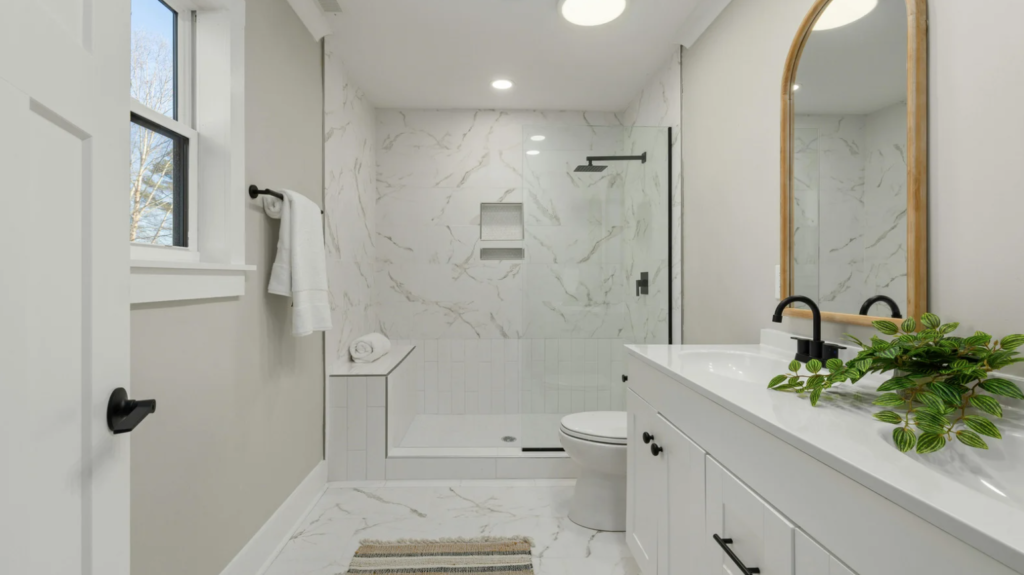
Marble vs Porcelain: Which Is Better for Bathroom Walls in Tampa?
For most Tampa bathrooms, porcelain is the more practical wall-tile choice because it has very low water absorption, needs less maintenance, and handles humid conditions well. Marble offers a unique natural appearance and can create a more luxurious finish, but it is more porous, more sensitive to staining and etching, and usually requires sealing and greater long-term care. The best choice depends on whether you prioritize ease of ownership or natural-stone character.
This does not mean marble is a bad material for Florida. It means homeowners need to understand what they are buying. A correctly installed marble wall can perform beautifully, but it should be chosen because you value natural stone enough to accept the maintenance that comes with it.
If you are planning the entire room rather than selecting tile in isolation, start with our complete guide to bathroom remodeling in Tampa.
How Tampa Humidity Changes the Marble vs Porcelain Decision
Tampa bathrooms operate in a warm, humid climate where moisture management matters year-round. Shower steam, wet surfaces, air-conditioning cycles, and Florida’s naturally high outdoor humidity can all increase the amount of moisture a bathroom needs to handle.
Porcelain tile is manufactured at high temperatures and is classified by extremely low water absorption. That makes it a strong fit for wet environments. It does not mean the wall assembly behind porcelain can be ignored; shower waterproofing is still essential. But the tile itself is highly resistant to moisture penetration.
Marble is natural stone. Its porosity varies by type, finish, and specific slab or tile. It can absorb moisture and staining agents more readily than porcelain, which is why sealing and careful cleaning become part of ownership.
For a broader comparison of materials suited to local conditions, read our guide to the best bathroom tile for Florida’s climate.
Porcelain Is Easier to Maintain
Maintenance is one of the biggest practical differences between the two materials. Porcelain typically requires routine cleaning with ordinary products appropriate for tile and grout. It does not usually need periodic sealing, and many finishes resist staining well.
Marble requires more discipline. Acidic cleaners, harsh chemicals, and certain personal-care products can affect the surface. Natural stone can also etch, which changes the finish rather than simply leaving a removable stain.
Depending on the stone and its exposure, sealing may need to be renewed periodically. Homeowners should also understand that natural variation, patina, and small changes over time are part of the material’s character.
If your priority is a bathroom that looks high-end but is easy to live with, porcelain usually wins. Modern porcelain can reproduce marble veining extremely well, including large-format slabs and bookmatched visual effects that once required natural stone.
| Factor | Porcelain | Marble |
|---|---|---|
| Water absorption | Very low | Varies by stone |
| Routine maintenance | Low | Moderate to high |
| Sealing | Usually not required | Often recommended |
| Etching risk | Very low | Higher |
| Visual uniqueness | Consistent patterns | Each piece is naturally unique |
Marble Still Wins for Natural Character
Porcelain has improved dramatically, but natural marble still has depth, variation, and mineral movement that manufactured surfaces cannot reproduce exactly. Every piece is different, and that uniqueness is part of why marble remains popular in luxury bathrooms.
Carrara, Calacatta, Dolomite, and other natural stones can create a softer, more organic look than printed porcelain. In a large primary bathroom, that natural variation can become part of the architecture rather than simply a surface finish.
Porcelain, however, gives designers much more control over consistency. If you want clean repeated veining, a specific background tone, or fewer unexpected color variations, porcelain can make the final result easier to predict.
Large-format porcelain also reduces grout lines, which can help a shower feel larger and more continuous. That is especially useful in smaller Tampa bathrooms where visual simplicity matters.
Which Is Better for Shower Walls?
For most homeowners, porcelain is the easier shower-wall material. It tolerates constant wetting, requires less maintenance, and is available in formats ranging from mosaics to oversized panels.
Marble can absolutely be used on shower walls, but the expectations should be different. Natural stone may darken temporarily when wet, require stone-safe cleaners, and show etching or staining over time depending on the material and products used in the shower.
Installation quality matters with both. Large-format porcelain requires flat walls and careful setting techniques. Natural marble requires attention to stone-specific mortar, layout, veining, and moisture behavior.
If you are deciding whether to redesign the entire wet area, our comparison of walk-in showers versus bathtubs for Tampa homes can help you determine the best layout before choosing the wall finish.
Installation Differences Matter More Than Most Homeowners Expect
Porcelain is dense and durable, but that density makes cutting and drilling more demanding. Large-format tile also requires a properly prepared substrate because wall irregularities become more noticeable as tile size increases.
Marble requires additional care because pieces should be sorted before installation. Veining direction, natural variation, and shade differences can dramatically change the finished appearance. A layout that looks random during installation may look unbalanced once the wall is complete.
Some light-colored natural stones can also react poorly to inappropriate setting materials, which is why product selection and installation method should be matched to the stone.
At Nexus Design, our direct crews install tile across kitchens, bathrooms, flooring projects, and outdoor renovations rather than outsourcing the finish work to unrelated crews. That field experience matters because large-format porcelain and natural stone both require precision in substrate preparation, layout, cuts, edges, and transitions.
Marble vs Porcelain Cost in a Tampa Bathroom
Material pricing varies widely by manufacturer, size, source, pattern, and finish. Standard porcelain tile can begin around a few dollars per square foot, while premium large-format or imported porcelain can cost considerably more. Natural marble commonly starts higher and can rise significantly for premium selections and large-format pieces.
Installation also affects the total. Intricate marble layouts, bookmatching, fragile pieces, large slabs, specialty edge work, or complex niches require more labor. Large-format porcelain can also increase installation cost because handling and cutting are more demanding.
A realistic project comparison should therefore include material, setting products, waterproofing, labor, waste, edge finishing, niches, and sealing where applicable rather than comparing tile price alone.
For the larger renovation budget, see our guide to how much a bathroom remodel costs in Tampa.
Which Tile Should You Choose for Your Tampa Bathroom?
Choose porcelain if you want a durable, low-maintenance bathroom with predictable color and strong moisture performance. It is the better default for busy households, rental properties, guest bathrooms, and homeowners who do not want to think about stone maintenance.
Choose marble if you specifically want natural stone and understand the maintenance commitment. It can be an excellent choice for a high-end primary bathroom where material character matters more than convenience.
A third option is to use both strategically. Porcelain can handle the main shower walls while marble appears in a niche, backsplash, vanity area, or decorative feature. That approach gives the room natural-stone character while limiting the amount of marble exposed to constant water.
If this decision is part of a larger project, our guide on what to expect during a full bathroom renovation explains where tile selection fits into the overall construction sequence.
Frequently Asked Questions About Marble and Porcelain Bathroom Tile
Is porcelain better than marble for a shower in Florida?
For most Florida homeowners, porcelain is the more practical shower material because it has very low water absorption, requires less maintenance, and resists staining and etching better than natural marble.
Can marble be used on shower walls in Tampa?
Yes. Marble can be installed on shower walls when the waterproofing, setting materials, sealing, and maintenance approach are appropriate for the specific stone. Homeowners should expect more care than with porcelain.
Does porcelain that looks like marble increase bathroom value?
High-quality marble-look porcelain can create strong buyer appeal because it provides a luxury appearance with easier maintenance. Resale value depends on the overall quality of the remodel, installation, layout, and how well the finish level matches the home.
Does marble bathroom tile need to be sealed?
Many marble installations benefit from a penetrating sealer, but the appropriate product and schedule depend on the specific stone, finish, location, and manufacturer or installer recommendations. Sealing helps reduce absorption but does not make marble completely stain-proof or etch-proof.
At Nexus Design, we only recommend what actually works. Our crews install flooring, remodel kitchens and bathrooms, and renovate outdoor spaces daily across residential projects — we know which materials hold up and which ones fail in high-humidity environments. That field experience is what guides every recommendation we make.