
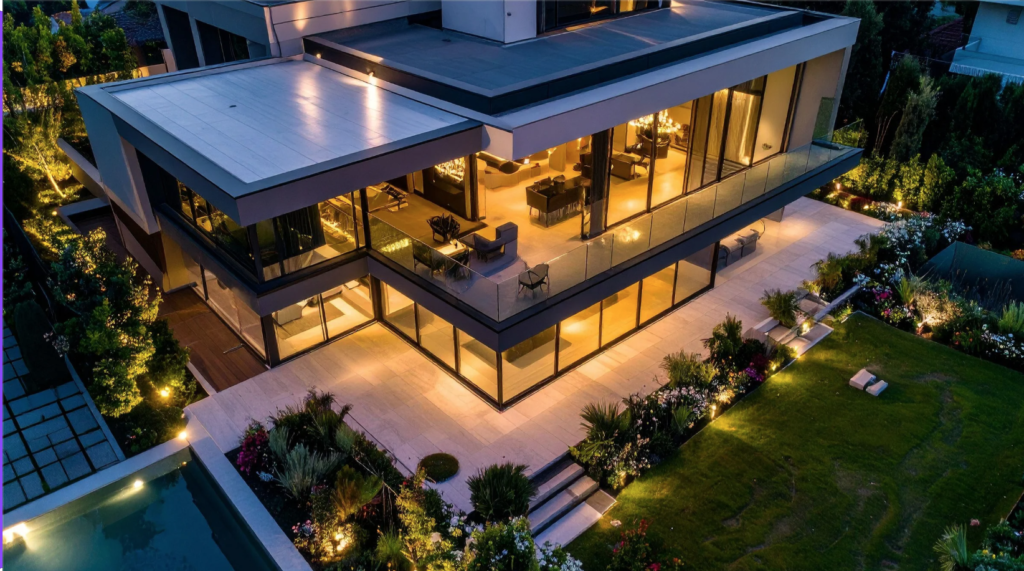
Living in the Tampa Bay area offers unparalleled coastal beauty, but it also presents a relentless environmental challenge: extreme subtropical humidity. For owners of luxury estates in waterfront neighborhoods like Davis Islands or South Tampa, managing the indoor climate is not just a matter of setting a thermostat. When outdoor relative humidity levels consistently hover above 80%, standard air conditioning units struggle to maintain a balanced environment, leading to a heavy, damp indoor feeling and soaring utility costs.
Achieving true thermal comfort requires looking beyond traditional cooling methods and embracing advanced building science. To protect your property’s interior finishes, safeguard indoor air quality, and keep operational expenses under control, investing in a comprehensive system for Tampa residential humidity control is a fundamental requirement for any modern luxury home.
1. The Physics of Indoor Humidity: Why Cooling Alone Fails
A common misconception in residential construction is that a larger air conditioning unit will automatically solve moisture problems. In fact, the opposite is often true. Oversized HVAC systems cool a room too quickly, shutting off before they have completed a full cycle. Because the system cycles off prematurely, it fails to extract water vapor from the air, leaving the indoor environment cold but uncomfortably damp.
True Tampa residential humidity control relies on managing latent heat—the moisture content of the air—independently of sensible heat (the actual temperature). To achieve this balance, elite custom builds and major renovations implement a two-pronged mechanical approach:
- Variable-Speed Variable Refrigerant Flow (VRF) Systems: Unlike traditional single-stage systems that run at 100% capacity or 0%, variable-speed compressors continuously scale their output up or down. They run longer, low-energy cycles that constantly extract moisture without over-cooling the living spaces.
- Dedicated Whole-Home Dehumidifiers: These specialized units work alongside your primary HVAC network. They pull air from the return ducts, remove latent moisture to maintain a perfect relative humidity baseline between 45% and 55%, and deliver dry, comfortable air back into the estate.
Properly integrating these mechanical networks requires precise structural planning. Just like isolating the heavy ventilation required when implementing advanced luxury kitchen scullery design ideas, your HVAC infrastructure must be strategically zoned to handle specific moisture loads without cross-contaminating social zones.
2. Engineering the Building Envelope: Stopping Moisture at the Barrier
While high-performance mechanical systems are vital, they should not be forced to work against a leaky, inefficient house structure. The building envelope—the physical barrier separating your indoor living space from the Florida climate—must be engineered to resist vapor drive, which is the natural movement of moisture from hot, humid outdoor spaces toward cool, dry indoor spaces.
When retrofitting an existing estate or building a new custom home, several high-performance insulation strategies must be deployed to guarantee maximum Tampa residential humidity control:
- Unvented Attic Spray Foam Insulation: Applying open-cell or closed-cell spray foam directly to the underside of the roof deck seals the attic completely. This brings the entire attic space into the home’s conditioned envelope, preventing superheated, humid air from trapping itself above your ceilings.
- Advanced Vapor Retarders: Installing smart vapor barriers within exterior wall assemblies prevents moisture from migrating through stucco and concrete blocks into the drywall.
- Low-E Impact-Rated Glazing: Utilizing multi-pane impact glass with advanced Low-E coatings minimizes solar heat gain while completely sealing the home against drafts.
Sealing the building envelope so tightly is an elite building practice, but it fundamentally transforms how your home handles structural loads. In fact, performing these envelope upgrades is often the natural secondary benefit when property owners invest in heavy structural reinforcement, making it a critical talking point when choosing between a hurricane-hardening structural retrofit vs. a total rebuild for a coastal estate.
3. Automation and Smart Telemetry: Maintaining the Balance Invisibly
In a luxury estate, comfort should be effortless. Modern mechanical engineering achieves this by integrating your environmental controls directly into the home’s primary automation backbone.
An advanced layout for Tampa residential humidity control relies on a network of discreetly placed hygrometers and smart sensors throughout the home. These sensors continuously monitor indoor dew points rather than just temperature. If relative humidity spikes in a specific area—such as a wine cellar, a master bathroom wet room, or a gallery corridor—the automated system activates the dedicated dehumidifiers or adjusts compressor speeds before a human occupant can even sense a change.
This high-tech integration protects delicate custom millwork, natural stone surfaces, and valuable art collections from moisture damage. Investing in this level of automated climate infrastructure requires careful foresight, which is exactly why modern buyers choose to implement a future-proof layout when installing a robust smart home infrastructure and wire for the future during a remodel.
Maximizing Asset Value and Reducing Energy Costs
Investing in thermal comfort science provides a substantial financial return. Running traditional, inefficient single-stage HVAC units to battle Florida’s heat causes premature equipment degradation, frequent compressor failures, and astronomical monthly energy bills.
By building or remodeling with a focus on modern climate engineering, you drastically drop your home’s operational overhead. A house optimized for comprehensive Tampa residential humidity control runs much more efficiently, using low-amperage continuous cycles that consume a fraction of the electricity of a standard system.
Furthermore, a home that can officially document a state-of-the-art climate envelope and absolute moisture protection secures massive points during real estate inspections. Affluent buyers pay a heavy premium for properties that guarantee pristine indoor air quality and freedom from mold risks, making this technical investment one of the highest returning options alongside top-tier ROI on appraisal-first remodeling projects in Tampa.
Master Your Indoor Climate with Nexus Design Corp
True luxury is defined by absolute comfort. You should never have to compromise the air quality of your estate or face predatory energy bills just to keep your home cool and dry.
At Nexus Design Corp, we fuse advanced environmental science with elite residential craftsmanship. We specialize in luxury custom home construction, high-end remodeling, and high-performance mechanical integrations specifically tailored to the coastal realities of Florida. Our expert team designs and installs turnkey systems for Tampa residential humidity control, utilizing variable-speed technology, uncompromised thermal envelopes, and seamless automation to ensure your home remains a pristine, energy-efficient sanctuary year-round.
Ready to experience a new standard of indoor comfort and protect your luxury asset? Contact Nexus Design Corp today to schedule an executive engineering consultation.