
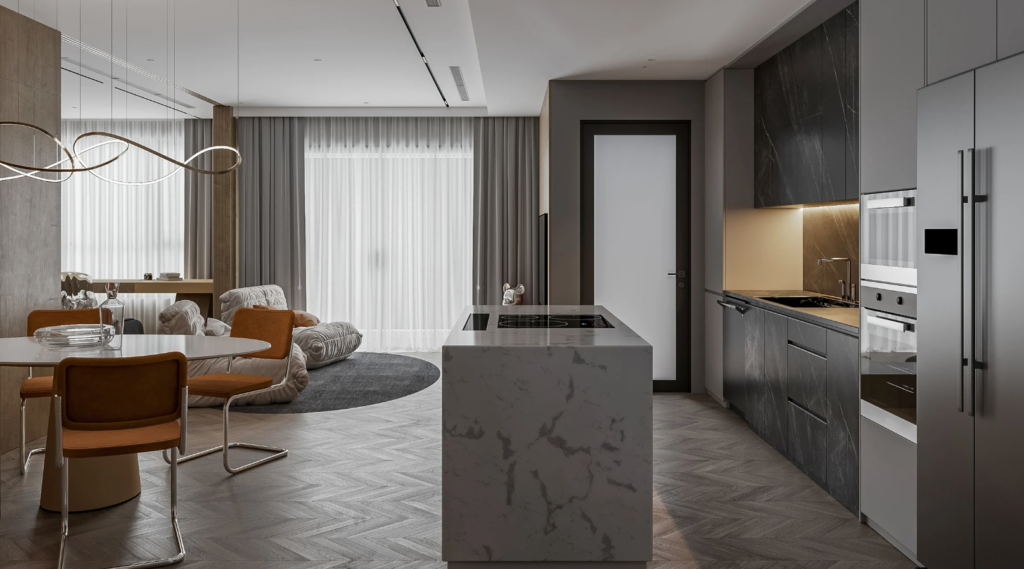
The evolution of modern residential architecture has fundamentally altered how we interact within our homes. For years, the traditional layout divided properties into highly specialized, isolated rooms. Today, luxury estates favor sweeping, uninterrupted vistas where the kitchen, dining area, and main living lounge merge into a single grand volume.
However, executing this layout on a massive scale comes with psychological risks. Without careful spatial planning, large open zones can easily feel cold, cavernous, and clinical—resembling a commercial lobby rather than a private sanctuary. For homeowners building or remodeling premium properties in locations like South Tampa and Odessa, mastering the subtle art of structural zoning within open concept floor plans Tampa area designs feature is the key to creating a home that feels both grandly expansive and deeply intimate.
1. Structural Micro-Zoning: Defining Spaces Without Adding Walls
The primary mistake in standard open layouts is failing to give individual functional zones their own distinct identity. When walls are removed, human psychology still craves a sense of enclosure and boundary to feel secure and relaxed.
To overcome this, elite custom home designers use structural boundaries built directly into the floor and ceiling planes. When drafting sophisticated open concept floor plans Tampa architectural firms deploy several invisible division strategies:
- Architectural Ceiling Adjustments: Utilizing dropped drywall soffits over the dining area, exposing custom timber beams across the family room, or incorporating recessed tray ceilings lined with subtle lighting grids to define specific zones from above.
- Elevated Floor Planes: Incorporating a subtle sunken living room or stepping up toward a custom wet bar area to create an immediate shift in spatial energy without blocking clear lines of sight.
- Contrasting Material Textures: Transitioning seamlessly from smooth, large-format porcelain slabs in the high-traffic kitchen zone to warm, textured wide-plank European oak flooring in the main relaxation lounge.
These built-in micro-zones allow large rooms to retain their visual scale while providing the functional privacy required for daily living. This strategic approach to zoning is critical, functioning as a structural cornerstone just like mapping out hidden operational zones when researching advanced luxury kitchen scullery design ideas.
2. Volumetric Proportions and the Science of Human Scale
An open-concept room feels cold when its vertical and horizontal proportions ignore the human scale. A space with 14-foot flat ceilings and hundreds of square feet of open flooring can overwhelm the senses, creating echo corridors and a lack of emotional warmth.
To fix these volumetric imbalances, custom builders focus on vertical grounding. This means creating strong visual focal points that draw the eye down and anchor the seating arrangements. Installing a massive, floor-to-ceiling fireplace clad in book-matched natural stone or creating expansive built-in white-oak library shelves gives the room a sense of permanence.
Furthermore, managing the acoustic properties of a wide-open volume is paramount. Incorporating specialized acoustic backing behind custom wood slat wall paneling softens sound reflections, ensuring that running appliances or distant chatter never ruins the quiet comfort of your primary relaxation zone.
Properly isolating sound waves and managing airflow through tightly sealed wall assemblies is an advanced building practice, directly aligning with the engineering required when choosing a hurricane-hardening structural retrofit vs. a total rebuild for a historic coastal estate.
3. Atmospheric Layering: Using Automation to Soften Spatial Volume
The right lighting infrastructure can instantly transform a vast, sunlit daytime entertainment space into a warm, cozy evening retreat. In large open layouts, relying on a grid of uniform recessed ceiling lights is a major design failure, as it flattens the room and destroys any sense of intimacy.
Achieving a cozy atmosphere within extensive open concept floor plans Tampa clients expect relies heavily on layered lighting control. This involves separating the electrical layout into independent zones:
The Lighting Layer Matrix
- Ambient Lighting: Concealed LED cove lighting tucked into ceiling steps to cast a soft, glare-free wash of light across the upper structure.
- Task Lighting: Sculptural low-voltage pendant lights suspended low over kitchen islands and dining tables to create warm, focused bubbles of light.
- Accent Lighting: Dedicated art spotlights and linear floor-recessed fixtures that skim textured stone walls, creating deep shadows and visual contrast.
Managing these complex lighting scenes manually is impossible, which is why luxury owners rely on centralized control systems. Pre-programming specific settings—like a “Dinner Party” scene that dims ambient ceiling grids while warming up low-hung pendants—requires a robust infrastructure. This tech forward design proves why top-tier owners choose to install a robust smart home infrastructure and wire for the future during a remodel.
4. Driving Real Estate Capital: The ROI of Well-Proportioned Layouts
In Florida’s elite real estate sector, a poorly configured open layout can actively hurt your property’s resale value. Sophisticated buyers reject homes where the kitchen sink is fully exposed to the formal dining table, or where the main family couch feels uncomfortably close to the front entrance.
Conversely, an open-concept property engineered with proper architectural zoning, integrated acoustic mitigation, and flawless visual transitions commands an elite premium. Designing fluid, comfortable layouts ensures the home remains highly competitive and functional across future real estate cycles.
Investing in intelligent, psychology-backed spatial configurations drives long-term asset appreciation, delivering an exceptional return alongside top-tier ROI on appraisal-first remodeling projects in Tampa.
Craft Your Perfect Space with Nexus Design Corp
An open-concept floor plan should deliver a sense of freedom and architectural grandeur without ever sacrificing the warmth, privacy, and cozy comfort that makes a house a home.
At Nexus Design Corp, we bridge the gap between bold, expansive architecture and the subtle science of human comfort. We specialize in luxury custom home construction, premium architectural design, and high-end remodeling services tailored to the Florida lifestyle. Our elite construction team expertly coordinates every detail of your open concept floor plans Tampa layout—from custom ceiling frameworks and acoustic wall integrations to automated lighting scenes and seamless floor transitions—ensuring your estate stands as an engineering triumph and a deeply inviting sanctuary.
Ready to transform your home’s layout into an intimate architectural masterpiece? Contact Nexus Design Corp today to schedule a private spatial design consultation.