
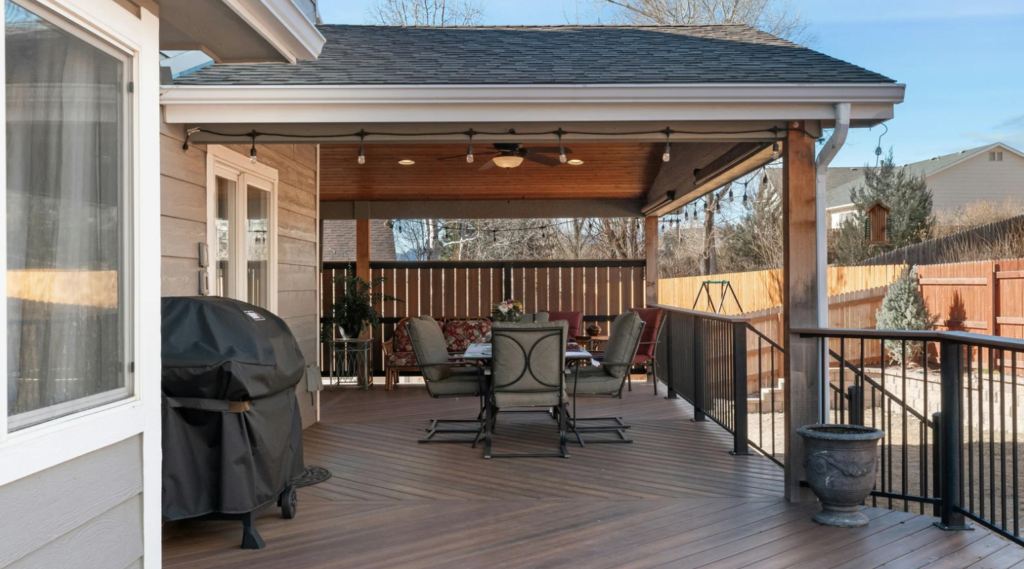
How Do You Choose a Patio Contractor in Tampa?
Choose a patio contractor in Tampa by verifying that the company is properly licensed for the work, reviewing comparable outdoor projects, comparing detailed scopes instead of bottom-line prices, and asking how the team will handle drainage, base preparation, materials, permits, and site conditions. The strongest contractor is usually the one who can explain exactly how the patio will be built, not just how the finished surface will look.
Patio renovation in Florida is more technical than many homeowners expect. A project can involve demolition, grading, drainage, pavers, tile, structural coverage, electrical work, plumbing, cabinetry, lighting, pool transitions, and weather exposure. The contractor needs to understand how those pieces interact.
If you are still defining the project itself, start with our complete patio renovation guide for Tampa.
Verify the Contractor’s License Before You Compare Anything Else
In Hillsborough County, construction work regulated by the State of Florida requires the appropriate contractor licensing. The exact license needed depends on the scope, so a simple paver installation and a structural patio addition should not automatically be treated as the same type of project.
Homeowners can verify state-regulated license information through the Florida Department of Business and Professional Regulation. Do not rely only on a license number printed on a proposal. Check the name, license category, status, and whether the record is current.
Also make sure the company name on the contract matches the business and qualifier information being represented. A business listing alone is not the same thing as proof that the person or company is properly licensed for the specific construction work.
Compare Scope, Not Just the Final Price
Two patio estimates can differ by thousands of dollars and still not represent the same project. One may include demolition, disposal, base reconstruction, drainage, edge restraints, sealing, cleanup, and permit coordination. Another may list only the visible finish installation.
Before comparing prices, compare line by line what each contractor is actually proposing. The contract should define the material, approximate quantity, preparation method, demolition responsibilities, drainage work, structural elements, utility work, and what happens if hidden conditions are discovered.
This is especially important when homeowners receive a low price per square foot. A square-foot number can be useful for a simple surface installation, but it becomes much less meaningful when the property requires demolition, grading, steps, difficult access, or drainage correction.
For a realistic breakdown of what drives project cost, read how much patio renovation costs in Tampa.
Ask Exactly How the Contractor Will Handle Drainage
Drainage is one of the best ways to separate a contractor who understands Florida outdoor construction from one who is focused only on finish installation.
Ask where water currently goes and where it will go after the renovation. The contractor should consider the slope of the patio, door thresholds, pool deck elevations, roof runoff, downspouts, adjacent landscaping, and the grade around the house.
A patio should not trap water against exterior walls or create a low point where rain collects after every storm. Depending on the property, the project may need channel drains, deck drains, slope corrections, or changes to adjacent grade.
Tampa’s heavy seasonal rainfall makes this especially important. If the contractor cannot explain the drainage plan before installation, the risk of expensive correction later goes up substantially.
Make Sure the Contractor Understands Florida Materials
A patio contractor should be able to explain why a specific material is appropriate for the property. Concrete pavers, porcelain pavers, travertine, natural stone, and poured concrete each behave differently in heat, rain, humidity, and direct sun.
Ask about slip resistance, heat retention, sealing, joint maintenance, staining, and how the material will be installed. The answer should be more detailed than “this one is popular.”
For pool areas, surface temperature and traction may matter more than decorative pattern. For covered patios, low maintenance and design continuity may matter more. For fully exposed spaces, UV stability and drainage become even more important.
Our guide to the best patio materials for Florida’s hot climate explains what homeowners should evaluate before selecting a finish.
Find Out Who Will Actually Perform the Work
The salesperson who prepares the estimate is not always the person who will be on site. Ask who manages the project, who installs the pavers or tile, who handles drainage or structural work, and how decisions are communicated between trades.
The more layers between the homeowner and the people doing the work, the more important communication becomes. Changes to slope, elevations, layout, or material transitions can affect several trades at once.
At Nexus Design, our own crews perform flooring, tile, pavers, cabinetry, kitchen, bathroom, and outdoor renovation work instead of passing the project through layers of unrelated subcontractors. That direct execution gives us better control over how one part of the project affects the next.
For larger outdoor living projects, that continuity can matter because flooring, drainage, cabinetry, lighting, pool connections, and finish details all need to work as one system.
What Should a Good Patio Estimate Include?
A professional patio estimate should be specific enough that you understand what you are buying. It does not need to list every screw, but it should clearly define the major components of the project.
| Estimate Item | Why It Matters |
|---|---|
| Demolition and disposal | Clarifies who removes existing materials and debris |
| Base and substrate preparation | Affects long-term stability and finish performance |
| Drainage and slope | Prevents standing water and water movement toward the home |
| Material specification | Allows homeowners to compare equivalent products |
| Permits and structural work | Defines responsibility for regulated construction |
| Change-order process | Explains how unexpected conditions affect price and schedule |
If the estimate contains large allowances, ask what assumptions are behind them. An allowance can be reasonable, but you should know what material or scope level it is intended to cover.
Red Flags When Hiring a Patio Contractor
Be cautious if a contractor gives a major project price without inspecting drainage, access, elevations, or existing conditions. Outdoor work depends heavily on the site.
Another warning sign is an estimate that is significantly lower than every competing proposal but does not explain why. The difference may be legitimate, but it may also mean important scope has been excluded.
Avoid contractors who refuse to provide clear licensing information, cannot explain who will perform the work, push for major decisions without written scope, or treat Florida weather conditions as irrelevant.
Also pay attention to communication before the contract. If basic questions about schedule, materials, drainage, or responsibilities are difficult to answer during sales, they are unlikely to become easier after demolition begins.
Questions to Ask Before Signing a Patio Contract
Ask whether the contractor is licensed for the proposed work and how you can verify that status. Ask whether permits are expected and who will obtain them.
Ask how the base will be prepared, how drainage will be evaluated, what happens if hidden damage is found, and how water will move away from the house after the project is complete.
Ask which material is being specified and why it makes sense for your exposure. If the patio receives intense afternoon sun or connects to a pool, the answer should address heat and wet traction.
Ask who will be on site each day, who manages the project, how changes are documented, and how the final walkthrough will be handled.
Finally, ask whether the design matches the way you actually want to use the space. If the project includes cooking, dining, shade, or pool zones, review our guide on how to design an outdoor living space in Tampa before approving the final layout.
If coverage is part of the decision, our comparison of covered versus open patios for Florida homes can help you determine whether the structural upgrade is worth the additional scope.
Frequently Asked Questions About Patio Contractors in Tampa
How can I verify a contractor license in Florida?
Florida homeowners can use the Department of Business and Professional Regulation’s online license search to check regulated contractor licenses by name, number, city, county, or license type. Verify that the license is current and appropriate for the proposed scope.
Should I hire the cheapest patio contractor?
Not based on price alone. Compare demolition, base preparation, drainage, material specifications, permits, structural work, cleanup, and project management before deciding which proposal offers the best value.
What should a Tampa patio contractor know about drainage?
The contractor should evaluate slope, door thresholds, roof runoff, adjacent grades, pool deck elevations, and how stormwater will move away from the home. Heavy Florida rainfall makes drainage planning a core part of exterior construction.
Do patio projects in Tampa require permits?
Permit requirements depend on the scope and jurisdiction. Structural additions, roofs, electrical work, plumbing, gas, and other regulated construction may require permits, while some surface-only work may not. The contractor should confirm requirements before construction begins.
At Nexus Design, we only recommend what actually works. Our crews install flooring, remodel kitchens and bathrooms, and renovate outdoor spaces daily across residential projects — we know which materials hold up and which ones fail in high-humidity environments. That field experience is what guides every recommendation we make.