
Pavers vs Concrete: Which Is Better for Florida Driveways?
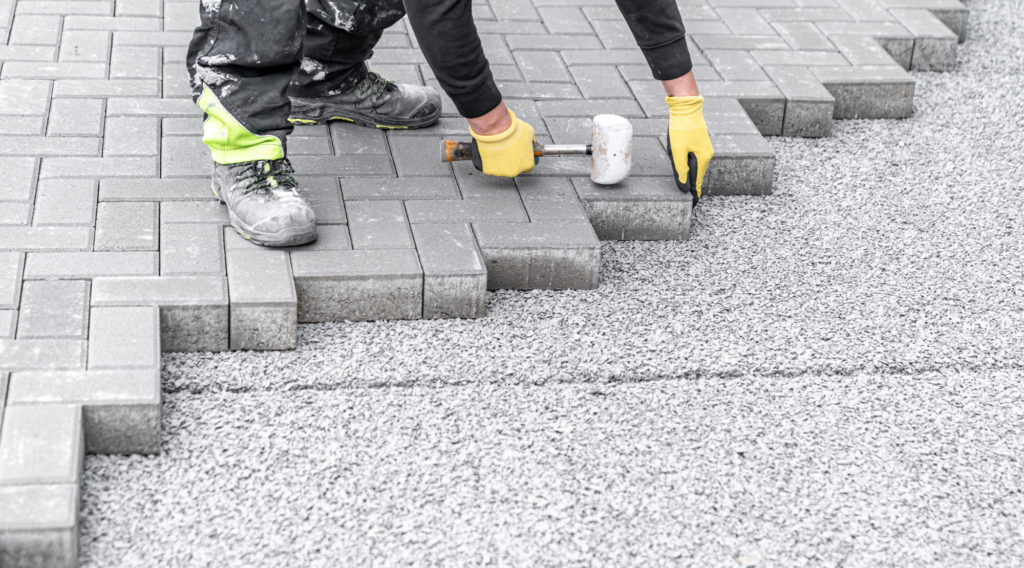
Pavers are usually the better long-term choice for Florida driveways when repairability, design flexibility, and resistance to visible cracking matter most. Poured concrete usually wins on lower upfront cost and simpler installation. In Tampa, the best option depends on drainage, soil preparation, budget, vehicle traffic, maintenance expectations, and how important curb appeal is to the homeowner.
Florida driveways deal with intense sun, heavy rain, irrigation, soil movement, vehicle loads, and repeated heating and cooling. Those conditions affect both systems, but they fail in different ways.
Concrete is a continuous slab. When movement or settlement occurs, cracks can become visible across the surface. Pavers are individual units, so movement is distributed across joints and damaged sections can often be repaired without replacing the entire driveway.
For homeowners planning a new installation, our Paver Installation in Tampa, FL complete guide explains the full process from excavation to final compaction.
Pavers vs Concrete Driveway Cost
Concrete is usually less expensive upfront. Paver driveways cost more because they require individual units, more labor, edge restraint, base preparation, cutting, joint material, and compaction.
For Tampa homeowners, poured concrete may be attractive when the main goal is controlling initial project cost. Pavers become more attractive when long-term repairability, appearance, and modular replacement matter more.
The price difference should not be evaluated only on installation day. A cracked concrete driveway may require patching, resurfacing, or replacement of larger sections, while individual damaged pavers can often be lifted and replaced.
If you want current Tampa paver pricing ranges, see how much paver installation costs in Tampa, FL.
Which Lasts Longer in Florida Weather?
Both pavers and concrete can last for decades when the base, drainage, and installation are correct. The difference is how each system responds to movement and damage.
Paver durability
Pavers are manufactured to handle substantial compressive loads and can perform well under residential vehicle traffic. Because the surface is made from separate units, small amounts of movement can occur without producing one long crack across the driveway.
Concrete durability
A properly reinforced and jointed concrete driveway can also last many years. However, cracking is normal in concrete, and control joints are used to influence where that cracking occurs.
Florida soil conditions, tree roots, drainage problems, and poor compaction can affect either material. Neither pavers nor concrete can compensate for a weak foundation underneath.
For homeowners focused on long-term paver performance, see how long pavers last in Florida weather.
Pavers Are Easier to Repair Than a Cracked Concrete Slab
Repairability is one of the biggest practical differences between the two systems.
If several pavers become stained, chipped, or uneven, crews can often remove those individual units, correct the base underneath, and reinstall or replace them.
Concrete repairs are more visible because the new patch may not match the color and texture of the surrounding slab. A significant crack or settlement issue can require cutting out and replacing a larger section.
That does not mean pavers never move. Poor compaction, weak edge restraint, erosion, or bad drainage can cause settlement. The advantage is that the system is usually easier to open and repair.
Drainage Matters More Than the Surface Material
Tampa’s heavy rain makes drainage one of the most important driveway design factors. Both pavers and concrete can perform poorly if the finished surface sends water toward the garage, foundation, landscaping, or neighboring property.
With standard pavers, most stormwater still moves across the surface unless the system is specifically designed as a permeable installation. The joints between ordinary pavers should not be assumed to function as a complete drainage solution.
Concrete also depends on accurate slope and joint design. Low spots can hold water, encourage staining, and create algae or slippery areas.
In both systems, drainage begins with excavation and grading. Surface material is only the final layer.
That is why a driveway quote should explain base preparation, finished elevations, and runoff strategy rather than only listing square footage and material.
Pavers vs Concrete: Which Requires More Maintenance?
Concrete generally has fewer joints to maintain, while pavers require more attention to joint material and occasional local leveling. However, concrete can be more difficult to repair cleanly when damage occurs.
Paver maintenance
Pavers may need cleaning, joint sand replenishment, weed control, stain treatment, and optional sealing. If units settle, they can often be lifted and reset.
Concrete maintenance
Concrete may require cleaning, crack repair, joint maintenance, and optional sealing or coatings. Decorative finishes can add their own maintenance requirements.
The right choice depends on the type of maintenance a homeowner prefers. Some owners prefer fewer joints. Others prefer the ability to repair isolated areas without replacing a large slab.
Pavers Offer More Design Flexibility and Curb Appeal Options
Pavers offer significantly more control over color, pattern, border design, texture, and visual scale than standard poured concrete.
Homeowners can use contrasting borders, multiple sizes, herringbone patterns, running bond, modular layouts, or different tones to coordinate the driveway with the architecture of the home.
Concrete can also be decorative. Stamping, color, scoring, exposed aggregate, and coatings can create more visual interest than a standard broom finish.
The difference is that pavers create depth through individual units and joints, while decorative concrete creates the appearance on one continuous slab.
If resale is part of the decision, our article on whether a new driveway increases home value in Tampa explains the difference between curb appeal and guaranteed financial return.
Which Is Better for Your Tampa Driveway?
Choose pavers when repairability, appearance, modular replacement, and design flexibility matter most. Choose concrete when controlling upfront cost and creating a simple continuous surface are the priorities.
Pavers may be better if:
You want a premium appearance, expect to keep the driveway long term, want the option to replace individual units, or need the driveway to coordinate closely with patios, walkways, or pool hardscape.
Concrete may be better if:
You want the lowest practical initial cost, prefer a simple surface, and are comfortable with the possibility that future crack repairs may remain visible.
For many Tampa homeowners, the decision comes down to budget versus repairability. Both systems can perform well when the base, drainage, and installation are correct.
If you are comparing materials before requesting quotes, see the best paver materials for Tampa’s climate.
Pavers vs Concrete Driveway Comparison
This table summarizes the main differences for Florida homeowners.
| Factor | Pavers | Concrete |
|---|---|---|
| Upfront Cost | Higher | Lower |
| Repairability | Excellent | More difficult to match |
| Crack Visibility | Low | Higher |
| Design Options | Very high | Moderate |
| Maintenance | Joint upkeep | Crack and joint upkeep |
| Best For | Long-term repairability and curb appeal | Lower upfront budget |
Pavers vs Concrete Driveway FAQ
Are pavers better than concrete for Florida driveways?
Pavers are often better for homeowners who prioritize repairability, curb appeal, and design flexibility. Concrete is often better when lower upfront cost and a simple continuous surface are the main priorities.
Do pavers crack less than concrete?
Individual pavers can chip or crack, but the modular system is less likely to show long continuous cracks across the driveway. Concrete naturally cracks over time, which is why control joints are used.
Are paver driveways more expensive than concrete?
Usually yes. Pavers typically have a higher installed cost because of material, labor, cutting, jointing, edge restraint, and base preparation. The long-term advantage is that individual sections can often be repaired more easily.
Which driveway is easier to repair after settlement?
Pavers are generally easier to repair after localized settlement because the affected units can be lifted, the base corrected, and the pavers reinstalled. Concrete usually requires patching or replacing a larger section.
The Driveway Surface Is Only as Strong as the Base Beneath It
Pavers and concrete can both fail when drainage, grading, compaction, or base preparation are poor. Tampa’s heavy rain makes those hidden installation details especially important because low spots and weak areas can become obvious quickly.
At Nexus Design, our direct crews install pavers, tile, flooring, cabinetry, and outdoor finishes across Tampa residential projects. Because we manage and execute the work with our own team rather than relying on layers of subcontractors, recommendations are grounded in how driveway systems actually perform in Florida conditions.
At Nexus Design, we only recommend what actually works. Our crews install flooring, remodel kitchens and bathrooms, and renovate outdoor spaces daily across residential projects — we know which materials hold up and which ones fail in high-humidity environments. That field experience is what guides every recommendation we make.