
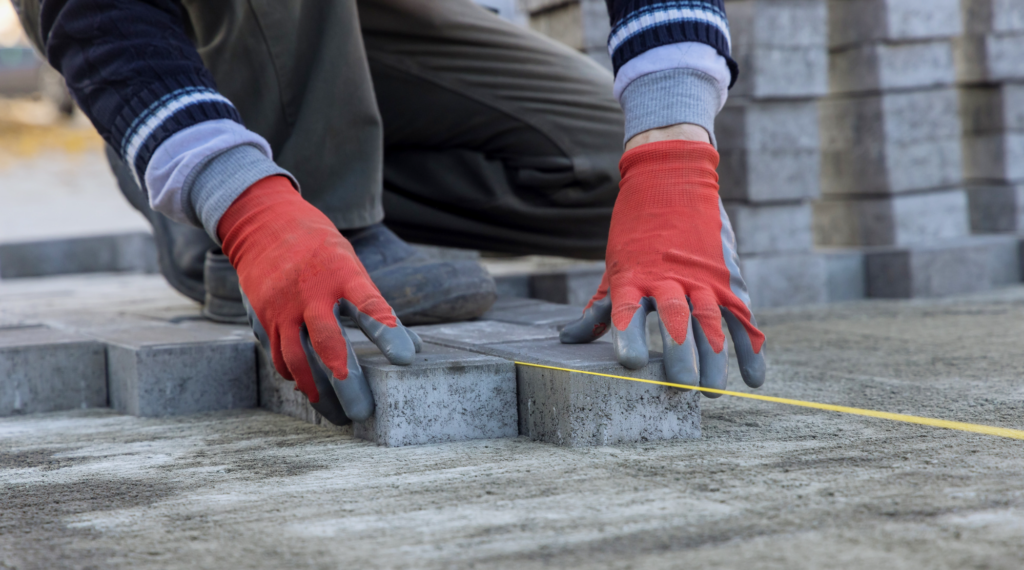
What Does Paver Installation in Tampa, FL Include?
Paver installation in Tampa typically includes demolition or excavation, grading, compacted base preparation, bedding material, paver layout, cutting, edge restraint, joint sand, compaction, and final cleanup. The most important part is not the visible paver itself but the base, drainage, and installation underneath it, especially in Florida’s heavy rain and high-humidity conditions.
Pavers are commonly used for driveways, patios, walkways, pool decks, and outdoor living spaces because they offer design flexibility and individual-unit repairability.
A well-built paver surface should look level and clean while still directing water properly. The installation must account for the surrounding house, pool, landscaping, drains, and existing elevations.
Homeowners often focus first on color and pattern, but the quality of excavation, compaction, edge restraint, and drainage has a larger impact on long-term performance.
How the Paver Installation Process Works
Professional paver installation follows a sequence. Skipping or rushing one phase can create settlement, movement, poor drainage, or uneven joints later.
1. Layout and site evaluation
The project begins by defining the installation area and checking elevations, access, drainage, nearby structures, irrigation, and any existing hardscape that must connect to the new surface.
2. Demolition and excavation
Existing concrete, old pavers, grass, soil, or damaged material may need to be removed. Excavation depth depends on the application and base requirements.
3. Base preparation
A compacted aggregate base creates the foundation for the finished pavers. The base must be installed at the correct depth, grade, and compaction for the intended traffic.
4. Bedding layer
A consistent bedding layer helps create the final setting surface. It should not be used to compensate for an uneven or poorly prepared base.
5. Paver installation and cutting
Pavers are laid in the selected pattern, then cut around borders, curves, drains, steps, structures, and other transitions.
6. Edge restraint and joint stabilization
Edges are secured to reduce lateral movement, and joint material is installed between pavers before final compaction.
Where Pavers Work Best Around Tampa Homes
Pavers are versatile because the same general system can be adapted to different areas around the property.
Driveways
Driveways need a base designed for vehicle loads, strong edge restraint, and a pattern that distributes movement effectively. Paver thickness and installation detail should match the application.
Patios
Patios benefit from the design flexibility of pavers. Borders, pattern changes, and different sizes can visually define dining, lounge, and cooking zones.
For homeowners planning a larger outdoor living project, the Patio Renovation in Tampa, FL complete guide explains how hardscape fits into the overall backyard layout.
Pool decks
Around pools, traction, surface temperature, drainage, and barefoot comfort become especially important. Lighter colors can be more comfortable in direct sun, while textured surfaces can improve grip when wet.
See our guide to the best pool deck materials for Florida homes for a broader comparison.
Walkways and entries
Pavers can create clear circulation from the driveway to the front door, side yard, patio, or pool while coordinating visually with the rest of the home’s hardscape.
Best Paver Materials for Tampa’s Climate
The right paver material should be chosen for heat, rain, wet traction, staining risk, maintenance, and the type of traffic it will receive.
Concrete pavers
Concrete pavers are one of the most versatile options for Tampa driveways, patios, and pool areas. They are available in many shapes, textures, and colors and are relatively easy to replace individually if damage occurs.
Travertine
Travertine is a premium natural stone option often used around pools and patios. Lighter varieties can remain relatively comfortable underfoot and create a high-end Florida look.
Porcelain pavers
Exterior-rated porcelain offers low water absorption and consistent appearance. It works particularly well in modern patios and pool areas but requires precise installation and proper substrate preparation.
Natural stone
Other natural stones can create distinctive designs, but they differ significantly in porosity, heat, traction, sealing needs, and durability.
For a deeper comparison, see the best paver materials for Tampa’s climate.
Drainage and Base Preparation Matter More Than the Pattern
Tampa’s heavy rainfall makes drainage one of the most important parts of any paver project. Water should move away from the home, garage, doors, and other sensitive areas rather than collect on the finished surface.
The finished pavers need the correct slope, but that slope must start with the base. Trying to solve drainage only at the surface can create inconsistent joints and uneven areas.
Compaction matters too. A base that is too loose can settle under vehicle or foot traffic, causing low spots and uneven edges.
Poor drainage can also contribute to sand movement, algae, staining, and long-term maintenance problems.
Driveways require even more attention because vehicle loads place greater stress on the base and edges than normal pedestrian traffic.
How Much Maintenance Do Pavers Need?
Pavers are relatively easy to maintain, but they are not maintenance-free. Cleaning, joint upkeep, weed control, stain treatment, and occasional replacement may be needed over time.
Joint sand can migrate gradually, especially in areas exposed to heavy rain, pressure washing, or high traffic. Replenishing and stabilizing joints can help preserve the installation.
If individual pavers settle, the affected section can often be lifted, the base corrected, and the same units reinstalled. That repairability is one of the strongest advantages of modular paving systems.
Sealing is optional for many products but may help with color enhancement, stain resistance, or joint stabilization depending on the paver and application. Homeowners should choose a sealer suitable for wet Florida conditions and the desired surface appearance.
For homeowners focused on longevity, our article on how long pavers last in Florida weather covers durability in more detail.
How to Plan a Paver Installation Project in Tampa
Start with how the surface will be used. A driveway, pool deck, patio, and walkway may use similar materials but require different base depths, edge details, surface textures, and patterns.
Step 1: Define the application
Determine whether the area must handle cars, foot traffic, pool water, outdoor furniture, grills, or other loads.
Step 2: Evaluate drainage
Identify where water currently flows and where the finished surface needs to drain. Existing low spots should be corrected before installation.
Step 3: Select material and pattern
Choose a paver based on performance first, then refine color, size, border, and pattern.
Step 4: Confirm edges and transitions
Review how the pavers will meet garage slabs, doors, curbs, pool coping, landscaping, drains, and existing walkways.
Step 5: Compare scope, not only price
A lower quote can be misleading if it includes less excavation, thinner base preparation, weaker edge restraint, or fewer drainage corrections.
If contractor selection is the next step, see how to choose a driveway contractor in Tampa.
For budgeting, our guide to paver installation cost in Tampa, FL explains the main price drivers.
Paver Application Comparison for Tampa Homes
Different areas around the home require different installation priorities.
| Application | Primary Priority | Important Installation Detail |
|---|---|---|
| Driveway | Load capacity | Base depth and edge restraint |
| Patio | Comfort and layout | Drainage and visual zoning |
| Pool Deck | Traction and heat | Wet grip and surface temperature |
| Walkway | Safe circulation | Transitions and slope |
Paver Installation FAQ for Tampa Homeowners
How long does paver installation take in Tampa?
A small patio or walkway may take several working days, while larger driveways, pool decks, or projects with demolition, drainage corrections, and complex patterns can take one to several weeks. Weather, access, and base preparation can change the schedule.
Are pavers better than concrete for Tampa driveways?
Pavers offer individual-unit repairability and greater design flexibility, while poured concrete can provide a continuous surface and may have a lower initial cost. The better option depends on budget, maintenance, appearance, drainage, and installation quality.
Do pavers need a compacted base in Florida?
Yes. Proper excavation, compacted base material, grading, and edge restraint are critical to reducing settlement and movement. The required base depends on the application and site conditions.
Can individual pavers be replaced if they are damaged?
Yes. One of the main advantages of pavers is that individual units can often be removed and replaced without rebuilding the entire surface, provided matching or compatible replacement pieces are available.
A Paver Project Is Only as Good as the Base Under It
Paver color and pattern get most of the attention, but long-term performance depends heavily on excavation, compaction, drainage, edge restraint, and the way transitions are built. Tampa’s rain makes those hidden details especially important.
At Nexus Design, our direct crews install pavers, tile, flooring, cabinetry, and outdoor finishes across Tampa residential projects. Because we manage and execute the work with our own team rather than relying on layers of subcontractors, recommendations are grounded in field experience and the installation methods that actually hold up in Florida conditions.
At Nexus Design, we only recommend what actually works. Our crews install flooring, remodel kitchens and bathrooms, and renovate outdoor spaces daily across residential projects — we know which materials hold up and which ones fail in high-humidity environments. That field experience is what guides every recommendation we make.