
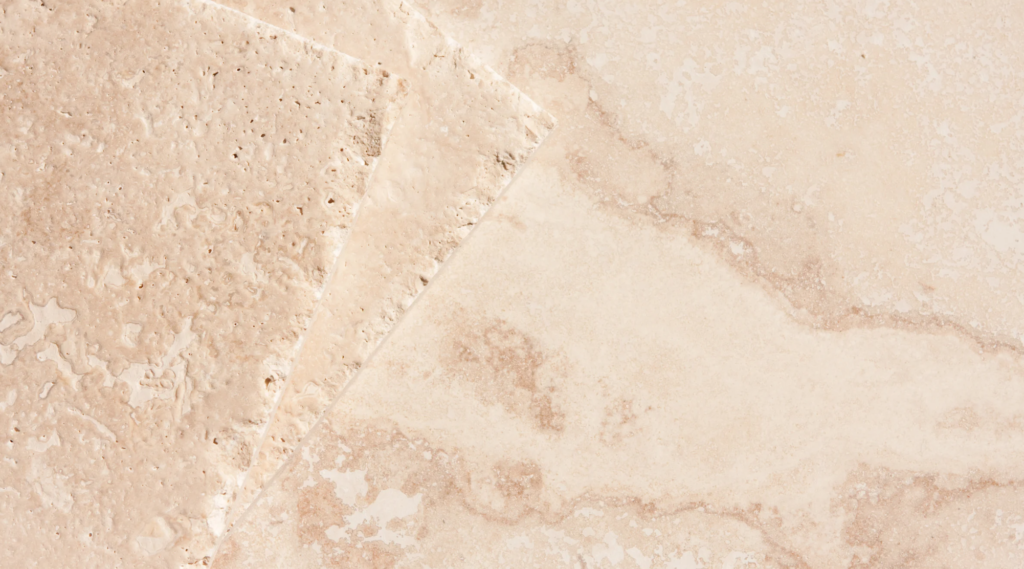
Travertine vs Concrete Pavers: What’s Best for Tampa?
Travertine is usually the better choice for premium pool decks and patios where barefoot comfort and natural appearance matter most, while concrete pavers are usually better for driveways, budget control, repairability, and design flexibility. In Tampa, the best option depends on heat exposure, traffic, moisture, maintenance expectations, and how the surface will be used.
Both materials can perform well in Florida, but they solve different problems. Travertine is a natural stone with unique variation and a cooler feel in lighter tones. Concrete pavers are manufactured, more consistent, and available in a much wider range of shapes and patterns.
The decision should start with application. A pool deck used barefoot has different priorities from a driveway carrying vehicles every day.
For a broader material overview, see the best paver materials for Tampa’s climate.
Which Stays Cooler in Tampa: Travertine or Concrete Pavers?
Light-colored travertine often stays more comfortable underfoot than darker concrete pavers in direct Florida sun. That is one of the main reasons travertine is popular around pools.
Surface temperature depends on color, density, finish, and sun exposure. A very dark travertine can still become hot, while a light concrete paver can perform much better than a dark one.
Travertine advantage
Lighter travertine reflects more solar energy and often feels more comfortable for barefoot use, especially around pools and uncovered patios.
Concrete paver advantage
Concrete pavers give homeowners more color and finish choices. Selecting a light, textured product can reduce heat concerns while keeping cost below many natural stone options.
For pool-specific planning, see our guide to the best pool deck materials for Florida homes.
Which Is More Durable in Florida Weather?
Both travertine and concrete pavers can last for decades when installed correctly. Their durability is influenced by base preparation, drainage, traffic, material quality, and maintenance.
Concrete pavers
Concrete pavers are designed to handle substantial compressive loads and are usually the more practical option for driveways. Individual units can be replaced if they chip, stain, or become damaged.
Travertine
Travertine is a durable natural stone but is more porous than many manufactured pavers. Quality varies, and softer or lower-grade pieces may be more vulnerable to chipping or surface wear.
Florida rain and humidity affect both materials mostly through the installation system. Poor drainage or weak base preparation can cause movement regardless of how durable the visible surface is.
For long-term performance, see how long pavers last in Florida weather.
Travertine vs Concrete Pavers: Maintenance Differences
Concrete pavers are generally easier to standardize for maintenance, while travertine may need more attention to sealing, staining, and natural variation.
Travertine maintenance
Because travertine is porous, sealing may be recommended depending on the finish, installation, exposure, and homeowner preference. Organic stains, rust, leaves, and pool chemicals should be cleaned promptly.
Natural voids and variation are part of the stone, so maintenance expectations should match the material rather than assuming it will behave like manufactured concrete.
Concrete paver maintenance
Concrete pavers may require joint sand replenishment, cleaning, weed control, stain treatment, and optional sealing.
One major advantage is replacement. If one or two units become damaged, they can often be changed individually without disturbing the entire surface.
Which Costs More: Travertine or Concrete Pavers?
Travertine usually costs more than standard concrete pavers, both in material price and sometimes in installation requirements. Premium concrete paver collections can narrow that gap.
Concrete pavers are generally the better choice when homeowners want to control budget while still getting a durable, attractive hardscape.
Travertine makes more sense when the project is positioned as a premium pool deck or patio and natural stone appearance is a major design priority.
The final installed price also depends on demolition, excavation, drainage, base preparation, access, borders, cuts, and project size.
For Tampa budget ranges, see how much paver installation costs in Tampa, FL.
Where Travertine and Concrete Pavers Work Best
The strongest decision is usually application-specific rather than choosing one material for the entire property.
Pool decks: travertine often wins
Travertine is particularly strong around pools because lighter finishes can stay comfortable underfoot and textured surfaces can provide good wet traction.
Driveways: concrete pavers usually win
Concrete pavers are generally better suited to vehicle loads, repeated traffic, oil exposure, and localized repairs.
For driveway-specific comparisons, see pavers vs concrete for Florida driveways.
Patios: either can work
Travertine is a strong choice for a premium natural look, while concrete pavers offer more patterns, colors, and budget flexibility.
Walkways: concrete pavers are usually more practical
For high-traffic walkways, concrete pavers provide strong durability and easier replacement at a lower typical cost than travertine.
If the patio is part of a larger outdoor project, see the Patio Renovation in Tampa, FL complete guide.
Which Looks Better: Travertine or Concrete Pavers?
Travertine delivers a natural, high-end look with color and texture variation that cannot be perfectly replicated by manufactured products.
That variation is part of the appeal. No two pieces are exactly the same, which gives the surface a more organic appearance.
Concrete pavers offer more control. Homeowners can choose specific colors, shapes, sizes, borders, and patterns with more predictable consistency.
Modern homes may benefit from large-format concrete pavers with clean lines. Mediterranean or coastal homes may pair especially well with light travertine.
Neither material is automatically more attractive. The better choice is the one that fits the architecture and surrounding hardscape without looking disconnected.
Travertine vs Concrete Pavers Comparison
This table summarizes the main differences for Tampa homeowners.
| Factor | Travertine | Concrete Pavers |
|---|---|---|
| Heat Comfort | Excellent in lighter colors | Good with lighter colors |
| Upfront Cost | Higher | Lower to moderate |
| Maintenance | Moderate | Moderate |
| Repairability | Good | Excellent |
| Design Consistency | Natural variation | Highly consistent |
| Best Application | Pool decks and premium patios | Driveways, patios, walkways |
Travertine vs Concrete Pavers FAQ
Is travertine better than concrete pavers in Tampa?
Travertine is often better for premium pool decks and barefoot comfort, while concrete pavers are usually better for driveways, budget control, repairability, and wider design flexibility.
Which is cooler around a pool, travertine or concrete pavers?
Light-colored travertine often stays more comfortable underfoot than darker concrete pavers, although color, density, finish, and sun exposure all affect surface temperature.
Which material is better for a driveway?
Concrete pavers are usually the more practical driveway choice because they are designed for vehicle loads, offer strong repairability, and typically cost less than travertine.
Does travertine require more maintenance than concrete pavers?
Travertine can require more attention to sealing, staining, and natural stone care. Concrete pavers typically require joint maintenance, cleaning, and occasional localized repair.
The Best Material Depends on Where You Put It
Travertine and concrete pavers can both work well in Tampa, but the right answer changes by application. Pool decks prioritize barefoot comfort and wet traction. Driveways prioritize load capacity and repairability. Patios balance appearance, heat, maintenance, and budget.
At Nexus Design, our direct crews install pavers, tile, flooring, cabinetry, and outdoor finishes across Tampa residential projects. Because we manage and execute the work with our own team rather than relying on layers of subcontractors, recommendations are grounded in how materials actually perform in Florida conditions.
At Nexus Design, we only recommend what actually works. Our crews install flooring, remodel kitchens and bathrooms, and renovate outdoor spaces daily across residential projects — we know which materials hold up and which ones fail in high-humidity environments. That field experience is what guides every recommendation we make.