
The Core Problem With Hardwood in Florida
Hardwood versus LVP is one of the most personal flooring decisions a homeowner makes — it touches on aesthetics, budget, practicality, and how long you plan to stay in the home. In most of the country, it’s a nuanced conversation. In Tampa, it’s heavily weighted by one factor that overrides most others: humidity.
Solid hardwood is a natural material that absorbs and releases moisture continuously. In climates with stable, moderate humidity, this movement is minimal and manageable. In Tampa — where humidity averages above 74% year-round and peaks in the upper 80s during rainy season — that movement is significant and relentless. Boards cup, gaps open between planks, finishes crack, and the subfloor beneath takes on moisture stress that accelerates the whole cycle.
Most reputable flooring manufacturers will not warranty solid hardwood installations in Florida. That’s not a marketing footnote — it’s a frank acknowledgment that the material and the climate are a poor match.
Engineered hardwood — a real wood veneer over a plywood core — handles Florida’s humidity meaningfully better than solid hardwood. The plywood core is dimensionally more stable than solid wood and responds less dramatically to humidity swings. It can work in Tampa when installed with proper moisture control, subfloor preparation, and acclimation. But it still carries humidity risk that LVP does not, and it costs significantly more.
How Close Does LVP Actually Look to Hardwood?
Ten years ago, this question had an obvious answer: hardwood looked dramatically better. The photographic print layer on early LVP was clearly artificial, and the texture didn’t hold up to close inspection.
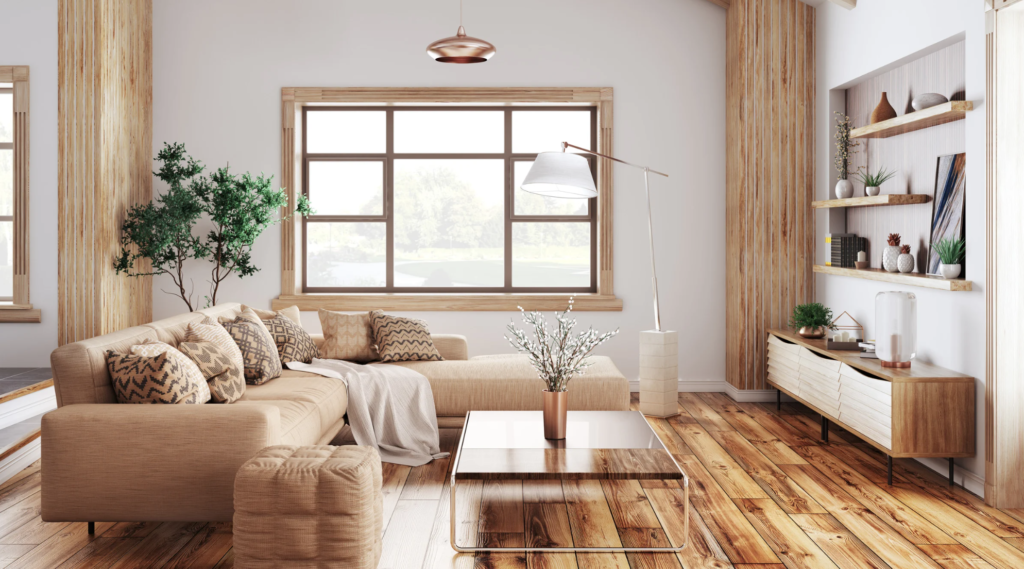
That gap has closed substantially. Premium LVP today uses high-resolution photographic imaging of real wood species, combined with an embossed texture layer that physically mimics wood grain — not just the pattern but the feel. The result is a floor that most visitors genuinely cannot distinguish from hardwood at normal viewing distance and typical indoor lighting.
The visual difference becomes apparent on close inspection — the repeat pattern eventually repeats across large spaces, and the texture, while convincing, doesn’t have the true variation of natural wood. For most homeowners living in the space daily, this distinction is irrelevant. For someone who has spent years around high-end wood floors, it may matter.
LVP also comes in plank widths and lengths that mirror current hardwood trends — wide planks of 7 inches or more, long lengths with minimal end joints, and realistic color palettes from pale Scandinavian oak to deep walnut. The aesthetic options are broad enough to match any interior design direction.
Durability and Lifespan
Solid hardwood has a durability advantage that’s worth acknowledging honestly: it can be sanded and refinished multiple times over its life, effectively resetting the surface appearance. A solid hardwood floor installed correctly in the right climate can last 50–100 years. In Florida, however, that theoretical lifespan is rarely achieved because humidity stress shortens the practical life of the installation long before the wood itself wears out.
Engineered hardwood can typically be refinished once or twice, depending on the veneer thickness. It lasts 20–30 years in Florida when installed with proper moisture management.
LVP cannot be refinished — when the wear layer is gone, the floor is replaced. Quality LVP with a 20-mil wear layer lasts 15–25 years under normal residential use. In Florida, that lifespan is consistent because the material isn’t affected by the humidity cycles that shorten hardwood’s functional life.
For pet owners, LVP’s scratch resistance at the 20-mil level is also noticeably better than hardwood finishes. More detail on that specific comparison is in our guide on best flooring for pet owners in Tampa.
Cost Comparison
LVP is the more affordable option at every quality level. Here’s how the two materials compare on installed cost in the Tampa market:
Premium LVP (20-mil wear layer): $6–$10 per square foot installed. This is the quality range worth considering for a Florida home — not the budget product.
Engineered hardwood: $8–$14 per square foot installed. The real wood veneer, acclimation requirements, and more involved installation process push the cost above LVP at comparable quality levels.
Solid hardwood: $10–$18 per square foot installed in Florida, when contractors are willing to do it — plus the added risk of warranty-voiding humidity conditions.
The cost difference between premium LVP and engineered hardwood for a 1,500-square-foot home can range from $3,000 to $6,000. When LVP delivers a comparable visual result with better humidity resistance, that difference is difficult to justify in the Tampa market.
Full pricing detail for all flooring types, including breakdown by room size and what drives costs up or down, is covered in our guide on flooring installation costs in Tampa.
Room-by-Room Breakdown
Living rooms and dining rooms: LVP is the practical choice. It delivers the wood look, handles Tampa’s ambient humidity without stress, and costs less. Engineered hardwood works if moisture control is excellent and budget allows. Solid hardwood is not recommended.
Bedrooms: Same recommendation as living areas. LVP is comfortable, waterproof, and easy to maintain. Engineered hardwood can work in bedrooms where the AC runs consistently and humidity stays controlled.
Kitchens and bathrooms: Neither solid nor engineered hardwood is appropriate. LVP or porcelain tile only. These rooms see direct moisture contact daily, and wood — even engineered wood — will fail here in Florida conditions over time.
Florida rooms and patios: No hardwood of any kind. Porcelain tile only for semi-outdoor spaces exposed to direct humidity and temperature extremes.
If you’re doing a whole-home flooring project and thinking about how to coordinate materials across different rooms seamlessly, our guide on choosing flooring for an open floor plan in Tampa covers transitions and consistency across large spaces.
Resale Value
Hardwood has traditionally been associated with higher home value — and in most markets, that association still holds. In Florida, the picture is more nuanced. Buyers who know the market understand that hardwood in Tampa is a humidity risk, and some will actively prefer LVP for that reason.
What consistently adds value in Tampa is waterproof flooring in good condition — whether that’s LVP, tile, or well-maintained engineered hardwood. Hardwood that shows any sign of humidity stress — cupping, gapping, finish cracking — is a negotiating point for buyers, not a selling point.
For most sellers, replacing damaged or aging hardwood with quality LVP before listing produces a better first impression, removes a buyer concern, and costs less than replacing it with new hardwood. The full analysis of what flooring choices deliver at resale is in our guide on what flooring adds the most value to a Tampa home.
Frequently Asked Questions
Can you install hardwood floors in Tampa?
Engineered hardwood can be installed in Tampa with proper precautions — subfloor moisture barriers, extended acclimation, and consistent climate control. Solid hardwood is not recommended and is not warranted by most manufacturers in Florida’s climate. If you want a real wood floor in Tampa, engineered is the only viable option, and even then it requires more care and maintenance than LVP.
Is LVP considered cheap by home buyers?
Not in Florida’s market. Tampa buyers are familiar with LVP and understand its advantages in the local climate. Quality LVP — especially wide-plank products with realistic texture — reads as a deliberate, practical upgrade rather than a budget compromise. Buyers who might view LVP as “lesser” in other markets often prefer it here because they know what humidity does to wood floors.
How long does engineered hardwood last in Tampa?
With proper installation, subfloor moisture control, and consistent interior climate management, engineered hardwood can last 20–30 years in Tampa. Without those precautions, it’s likely to show humidity stress — edge cupping, finish cracking — within 5–10 years. The quality of the installation and the consistency of the home’s climate control matter as much as the material itself.
What’s the most realistic-looking LVP for a Tampa home?
Look for LVP with an embossed-in-register (EIR) surface texture — this means the texture is aligned with the printed grain pattern rather than applied uniformly across the plank, which is what makes premium LVP feel and look genuinely wood-like. Wide planks (6 inches or more), longer lengths, and varied plank lengths within the same box also contribute to a more realistic appearance by reducing the repetition that makes vinyl flooring look synthetic.
At Nexus Design, we only recommend what actually works. Our crews install flooring daily across residential projects — we know which materials hold up and which ones fail in high-humidity environments. That field experience is what guides every recommendation we make.