
Timelines by Material
Flooring installation in Tampa typically takes one to seven days for most residential projects, depending on the material chosen, the size of the area, and the condition of the subfloor. The single biggest variable isn’t the square footage — it’s what the crew finds when the existing floor comes up. Here’s what to expect for each major flooring type under normal conditions:
LVP and SPC — 1 to 3 days
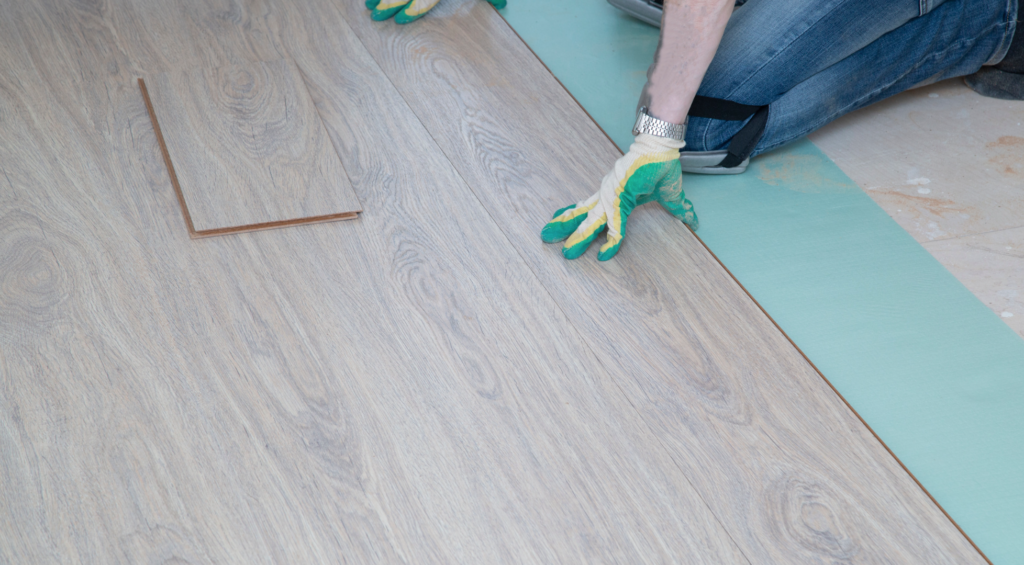
Luxury vinyl plank and SPC are the fastest floors to install. They click together as a floating floor directly over the subfloor — no mortar, no adhesive, no drying time, and no curing period required. A two-person crew can typically complete 800–1,000 square feet of LVP in a single full day when the subfloor is prepped and ready. Larger homes, or those with many transitions, doorways, and custom cuts, may run two to three days.
One of LVP’s biggest practical advantages is that the floor is walkable immediately after installation. There’s no wait time before furniture goes back and the room is usable. For families who need to minimize disruption, this matters.
Porcelain tile — 3 to 7 days
Tile installation takes significantly longer because of the chemistry involved. Mortar requires a minimum cure time of 24 hours before grouting can begin. After grouting, the floor needs another 24–72 hours before it can sustain normal foot traffic without risking shifted or cracked tiles. Grout sealing adds one more step and another short wait period.
For a combined kitchen and bathroom project of 500 square feet, expect 3–5 days of active work plus cure time. Complex patterns — herringbone, diagonal, large-format tiles with tight grout lines — add planning time and slow the installation pace considerably.
Engineered hardwood — 3 to 5 days total
Engineered hardwood has a requirement that adds time before installation even begins: acclimation. The flooring needs to sit inside the home for 48–72 hours before being installed, allowing the planks to adjust to the room’s temperature and humidity. Skipping this step leads to expansion or contraction after installation — boards that gap or buckle. The installation itself takes 1–2 days for a standard-size space, making the total project window 3–5 days from delivery to completion.
Carpet — 1 to 2 days
Carpet installation is one of the faster processes. A standard-size home can typically be carpeted in a single day. The floor is usable immediately, though light traffic for the first 24 hours lets the carpet settle before heavy furniture is moved back in.
What Adds Time to a Project
Subfloor preparation
If the subfloor needs leveling, structural repairs, or moisture treatment before the new floor goes down, that adds one to two full days — sometimes more. In Tampa, subfloor moisture issues are common, especially in older homes, homes with a history of AC leaks, or rooms that have had water-based flooring failures in the past. A professional installer will identify subfloor issues during the initial assessment. If a quote is given without any mention of subfloor condition, that’s worth asking about directly before work begins.
Removal of existing flooring
Demolition adds time to any project. Removing old carpet is the fastest — usually a half-day for a standard home. Vinyl and LVP removal is also relatively quick. Tile is the most labor-intensive material to remove — it can add a full day or more for a single room, depending on how well the original tile was bonded and how thick the mortar bed is underneath.
Layout complexity
Open floor plans, rooms with many doorways, angled walls, and custom transitions all require more cutting and planning time. They don’t always add full days to a project, but a job estimated at two days in a straightforward layout might run into a third in a more complex space. If you have an open floor plan and are thinking through how to handle flooring across it, our guide on choosing flooring for an open floor plan covers the key decisions.
Combining flooring with other renovations
If flooring is part of a larger project — a kitchen remodel, bathroom renovation, or full home update — it’s typically scheduled last, after cabinets, fixtures, plumbing, and paint are complete. This is the right sequencing. Flooring installed before cabinets can be damaged during the cabinet installation; flooring installed before paint requires careful masking and still risks overspray. Planning the order of trades is part of how a well-run renovation stays on schedule.
How to Prepare Your Home
The most impactful thing a homeowner can do to keep a flooring project on schedule is to have rooms fully cleared before the crew arrives. Furniture moving is time-consuming for installers — every hour spent moving furniture is an hour not spent installing floor. Most contractors will help move lighter pieces, but large items like bedroom sets, entertainment centers, and dining tables should be out of the room in advance.
Clear closet thresholds and remove items stored under beds or in areas that will be worked on. Make sure the crew has unobstructed access to electrical outlets for tools and a clear path to move materials through the home.
If the installation includes a kitchen or bathroom, coordinate appliance access with the installer ahead of time. Refrigerators, dishwashers, and washing machines may need to be temporarily moved and reconnected, which often involves a plumber or appliance technician in addition to the flooring crew.
How to Live Through a Flooring Installation
For whole-home flooring projects, most families plan to spend the active installation days away from the house or limit their time to rooms not being worked on. The noise from cutting equipment, the dust from demolition, and the restricted access to living areas make staying home during a full-home project uncomfortable for most households.
For partial-home projects — a single room, one floor, or just the bathrooms — it’s usually possible to stay home and simply avoid the work zone. Coordinate with the installer about which areas will be off-limits each day so you can plan accordingly.
For tile projects, plan for the affected bathrooms or kitchens to be fully off-limits for at least 48 hours after grouting. Walking on fresh grout is one of the most common causes of tile callbacks — it shifts tiles before the mortar has cured and results in loose tile that needs to be re-set.
What Happens When Surprises Come Up
Even well-planned projects encounter surprises once existing flooring comes up. The most common: subfloor damage that wasn’t visible until demolition, old tile set in a thick mortar bed that’s harder to remove than expected, or plumbing and electrical runs that complicate the layout.
A professional contractor will stop, communicate the issue clearly, and give you options before proceeding. Surprises shouldn’t mean unilateral decisions or surprise invoices at the end — they should mean a conversation about what was found, what the options are, and what it adds to the timeline and budget. If a contractor proceeds without that conversation, that’s a red flag worth taking seriously.
Building a 10–15% time buffer into your project expectations — just as you would with budget — means surprises don’t cause disproportionate stress. Most residential flooring projects finish within one day of the original estimate when the contractor has assessed the subfloor upfront and communicated clearly throughout.
Frequently Asked Questions
Can flooring be installed in one day?
Yes, for smaller areas or with faster materials like LVP. A 500–800 square foot area of LVP with a prepped, flat subfloor can realistically be completed in a single day by an experienced two-person crew. Tile and engineered hardwood almost always take longer due to cure times or acclimation requirements regardless of room size.
How long after tile installation can I walk on it?
You should wait at least 24 hours after the tile is set before walking on it, and 48–72 hours after grouting before normal traffic resumes. Walking on tile before the mortar has cured can shift individual tiles and cause lippage — an uneven edge between adjacent tiles that’s difficult and expensive to correct after the fact.
Does whole-home flooring take proportionally longer than one room?
No — the relationship isn’t linear. A whole-home LVP project of 1,500–2,000 square feet typically takes 3–5 days, not 10. Setup, equipment, and material logistics are fixed costs that don’t multiply with square footage. Experienced crews also work faster when they have space to maneuver and don’t have to keep packing up and moving between separate small jobs.
What’s the best time of year to install flooring in Tampa?
Any time of year works for LVP, SPC, and tile since these materials aren’t sensitive to humidity during installation. Engineered hardwood is better installed during drier months — typically October through April in Tampa — when indoor humidity is lower and acclimation is more predictable. Avoid scheduling flooring installation during active hurricane season if possible, since power outages or emergency scenarios can disrupt a mid-project timeline.
At Nexus Design, we only recommend what actually works. Our crews install flooring daily across residential projects — we know which materials hold up and which ones fail in high-humidity environments. That field experience is what guides every recommendation we make.