
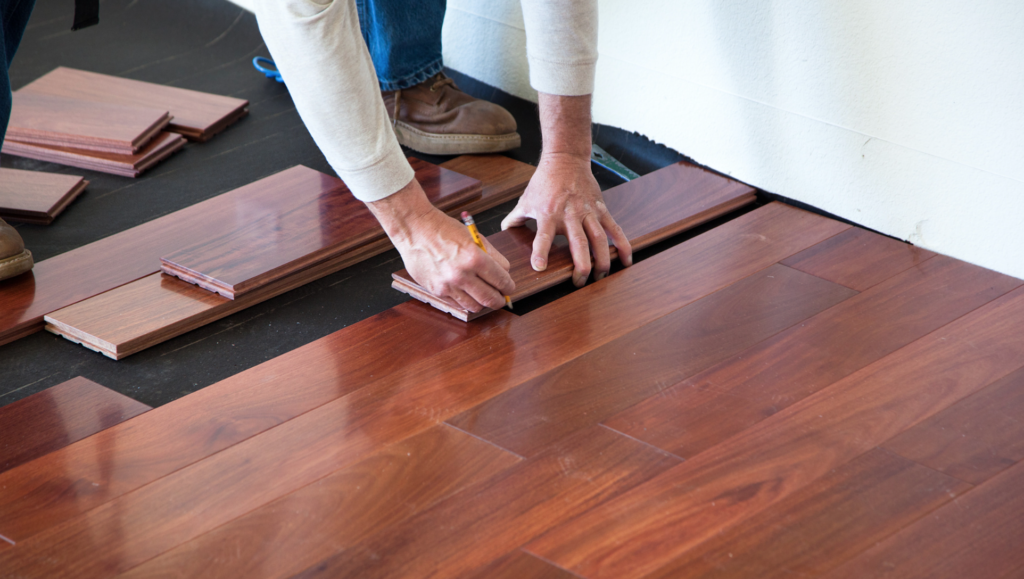
Average Flooring Installation Costs by Material
Flooring installation cost in Tampa ranges from about $4 to $18 per square foot fully installed, depending on the material you choose, the condition of your subfloor, and the complexity of the layout. That’s a wide range — which is why breaking it down by material gives you a much clearer picture for budgeting.
Here’s what Tampa homeowners typically pay in 2026, with materials and labor combined:
Luxury Vinyl Plank (LVP): $5–$10 per square foot installed. This is the most popular choice for Florida homes, and the pricing reflects both its accessibility and the speed of installation. A 500-square-foot living area would run roughly $2,500–$5,000 all in. LVP installs faster than tile or hardwood because it floats over the subfloor without mortar or adhesive, which keeps labor costs lower.
Porcelain tile: $8–$15 per square foot installed. Tile takes more labor — mortar, setting, grouting, and sealing — which pushes the cost higher. Large-format tiles and complex patterns like herringbone or diagonal layouts add even more to the labor cost because of the additional cutting and layout planning involved.
SPC flooring: $6–$11 per square foot installed. SPC sits close to LVP in pricing but is slightly more expensive due to the denser core material. The installation process is nearly identical to LVP, so labor costs are similar. If you want the extra rigidity and dimensional stability of SPC over standard LVP, the price premium is modest.
Engineered hardwood: $8–$14 per square foot installed. A viable option in Florida bedrooms and living areas when proper moisture control is in place. More expensive than LVP for a similar aesthetic, and the installation requires acclimation time before work begins — adding to the overall project timeline.
Carpet: $4–$8 per square foot installed. The most affordable option for bedrooms. Not recommended in wet areas or Florida rooms, and increasingly avoided by homeowners planning to sell, since buyers in the Tampa market tend to view carpet as something they’ll need to replace.
What Drives the Final Price
Subfloor condition
The subfloor is what your new flooring sits on. If it’s uneven, damaged, or shows signs of moisture — which is common in older Tampa homes — it needs to be repaired or replaced before installation can begin. Subfloor repairs can add $1–$3 per square foot to the project, sometimes significantly more if there’s water damage that has compromised the structural integrity of the wood beneath. A good contractor will always inspect the subfloor before providing a final quote. Be wary of any estimate that doesn’t mention subfloor condition.
Room size and layout
Larger rooms cost more in total but typically less per square foot because setup and teardown costs are spread across more area. Complicated layouts — rooms with many angles, alcoves, built-in features, or curved walls — require more precise cuts and more time from the installer, which increases labor cost. Stairs are priced separately and add to the total if they’re part of the project scope.
Material grade and quality tier
Within each flooring category, there’s a significant range of quality. Entry-level LVP might cost $1.50 per square foot in materials; premium LVP with a thick wear layer, realistic embossing, and better dimensional stability can cost $5–$7 per square foot. The same spread exists for tile. Choosing a higher-grade material increases your upfront cost but typically delivers better durability, a longer lifespan, and a more realistic appearance.
Removal of existing flooring
If there’s old flooring that needs to come out before the new installation, that adds labor time and disposal cost — typically $1–$3 per square foot depending on the material being removed. Tile removal is the most labor-intensive option, often requiring jackhammers or chisels and generating significant debris. Carpet and LVP removal are faster. If LVP can be installed over the existing surface — which is possible when the existing floor is flat and structurally sound — skipping demolition can save a meaningful amount. Our guide on installing over existing flooring in Tampa explains when this is and isn’t appropriate.
How to Control Your Budget
There are legitimate ways to keep flooring costs in check without compromising on the result. The key is knowing where the money goes and where there’s flexibility.
Do the whole home at once. Installing flooring in all rooms in a single project is almost always cheaper per square foot than doing it room by room. Fixed costs — setup, delivery, equipment — are spread across more square footage, and the crew works more efficiently without stopping and starting between separate jobs.
Choose LVP over tile in living areas. If you’re budget-conscious and the rooms aren’t wet zones, LVP delivers a comparable aesthetic to hardwood or tile at a lower installed cost. Save tile for bathrooms and kitchens where waterproofing and durability justify the premium.
Get the subfloor assessed early. Subfloor surprises are the most common source of budget overruns. Asking a contractor to inspect the subfloor before finalizing the quote — and budgeting a 10–15% contingency for subfloor repairs — prevents surprises mid-project.
Avoid complex patterns unless they’re a priority. Herringbone, diagonal, and custom inlay patterns significantly increase labor cost. A standard straight-lay installation of the same tile costs noticeably less and still produces a high-quality result.
Flooring Cost Comparison at a Glance
| Material | Material Cost/sq ft | Installed Cost/sq ft | 500 sq ft Estimate |
|---|---|---|---|
| LVP | $2–$5 | $5–$10 | $2,500–$5,000 |
| SPC | $3–$6 | $6–$11 | $3,000–$5,500 |
| Porcelain Tile | $2–$8 | $8–$15 | $4,000–$7,500 |
| Engineered Hardwood | $4–$8 | $8–$14 | $4,000–$7,000 |
| Carpet | $1–$4 | $4–$8 | $2,000–$4,000 |
Frequently Asked Questions
How do I get an accurate flooring estimate?
The most reliable way is to have a contractor measure your space in person and assess the subfloor condition before quoting. Online calculators give rough ballpark numbers, but they can’t account for subfloor repairs, layout complexity, or material grade variations that significantly affect final cost. Always get at least two written quotes that itemize materials, labor, removal, and disposal separately before committing to any project.
Is it cheaper to install flooring room by room or all at once?
All at once is almost always cheaper per square foot. Contractors price larger jobs more efficiently — setup, teardown, and material delivery are fixed costs that get spread across more square footage. Installing room by room also means more transition strips, more material waste from separate cuts, and a higher risk of mismatched material batches if you return to a flooring line months later.
Does the flooring material affect my home’s resale value?
Yes — in Florida’s market, waterproof flooring is a clear selling point. Buyers expect humidity-resistant materials in Tampa homes, and homes with tile or quality LVP throughout move faster and command stronger offers than comparable homes with carpet or aging laminate. The full breakdown of which flooring investment pays off most at resale is covered in our guide on what flooring adds the most value to a Tampa home.
What is a reasonable contingency budget for a flooring project?
A 10–15% contingency on top of your quoted price is a reasonable buffer for most flooring projects. The most common unexpected costs come from subfloor repairs discovered during installation, additional transition strips needed once the layout is visible, or material overage if cuts produce more waste than initially estimated. Having that buffer available keeps the project moving without financial stress if something unexpected surfaces.
At Nexus Design, we only recommend what actually works. Our crews install flooring daily across residential projects — we know which materials hold up and which ones fail in high-humidity environments. That field experience is what guides every recommendation we make.